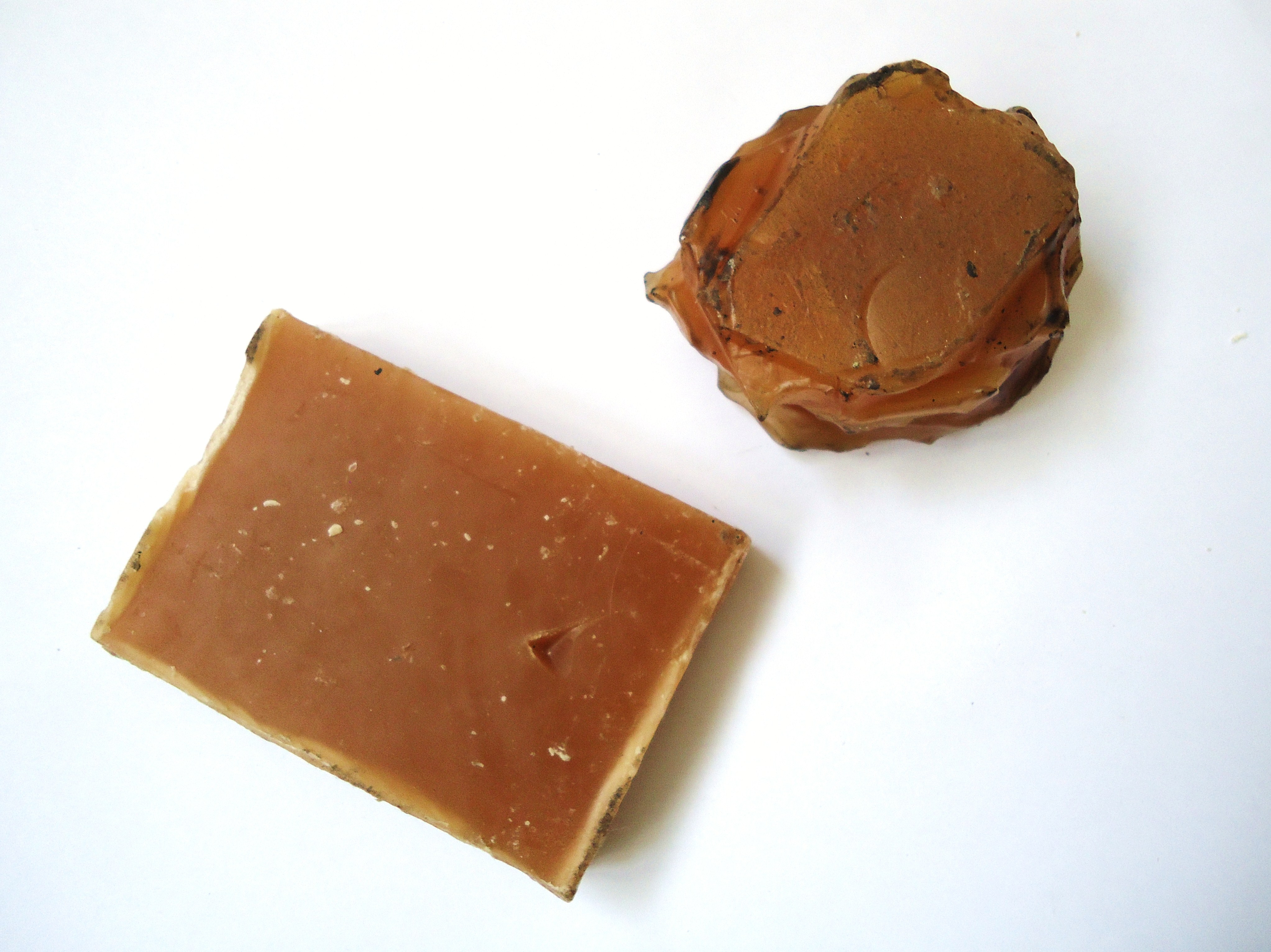
Wax versus oil
An oil hardens inside the wood, while a wax forms a thin layer on the surface that can be buffed and renewed. Wax gives a pleasant touch and some resistance to fingerprints and light moisture, but it is softer than a cured oil or a varnish and wears away with handling. For that reason many people treat wax as a top layer that is reapplied from time to time rather than a long-term seal on its own.
Common waxes
- Beeswax — a soft natural wax, often blended with oils to make it easier to spread.
- Carnauba — a harder plant wax from the carnauba palm, added to blends to raise hardness and sheen.
- Wax pastes — ready-made blends of these waxes with solvents or oils, sold for furniture.

Applying and buffing wax
- Make sure the surface is clean, dry and free of loose dust.
- Apply a thin film of wax with a soft cloth, spreading it evenly along the grain.
- Leave it for the short time stated by the maker so the carrier can flash off.
- Buff with a clean dry cloth until the haze lifts and a soft sheen appears.
- Add a second thin coat only if the surface still looks uneven, then buff again.
Keep coats thin
Thick wax stays smeary and attracts dust. Several thin coats, each buffed well, give a cleaner result than one heavy layer.
Refreshing a dull surface
Waxed surfaces dull as the layer is handled and cleaned. A surface that has only lost its sheen can often be revived by wiping off dust and old residue, then applying and buffing a fresh thin coat. If the wax has built up unevenly over years, the old layer can be removed with a suitable wax-and-polish remover or a solvent recommended by the maker before re-waxing.
| Goal | Typical choice |
|---|---|
| Soft natural feel | Beeswax-rich paste. |
| Harder, brighter sheen | Blend containing carnauba. |
| Protective base layer | Oil first, then wax on top. |